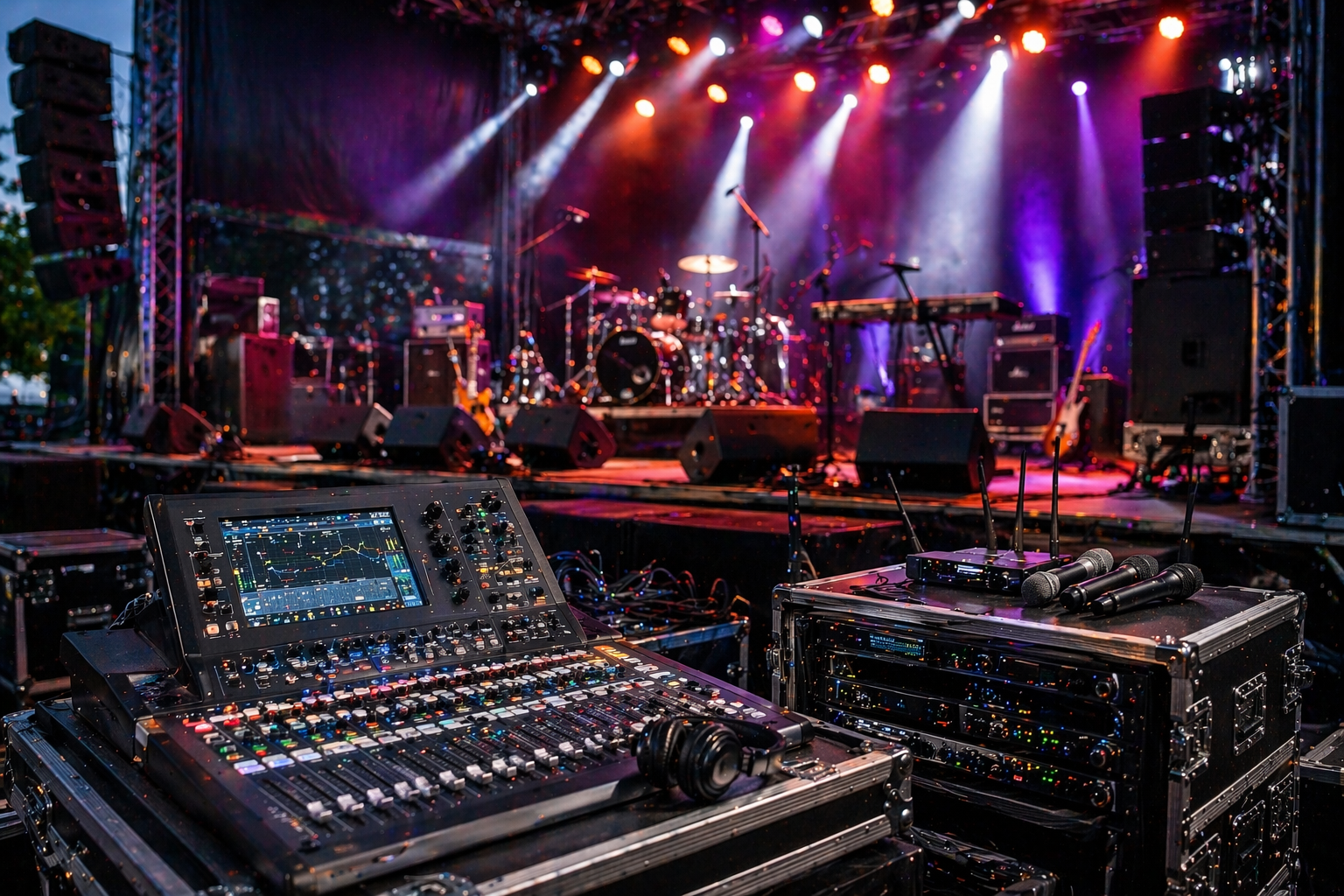
Creating a powerful live sound experience is essential for any performance, whether it is a small gig, a corporate event, or a large concert. A well-planned live sound setup ensures clarity, balance, and impact, allowing your audience to fully enjoy the performance.
Understanding Live Sound Basics
Live sound is all about delivering clear audio to an audience in real time. Unlike studio recording, live environments present challenges such as background noise, acoustics, and audience size. This makes proper equipment and setup crucial.
Essential Components of a Live Sound Setup
A successful live setup requires a combination of key equipment working together seamlessly.
1. PA System
A PA (Public Address) system is the backbone of live sound. It includes speakers, amplifiers, and mixers that project sound to the audience.
2. Mixer
The mixer allows you to control volume levels, balance different audio sources, and apply effects. It ensures that vocals and instruments blend perfectly.
3. Microphones
Dynamic microphones are commonly used for live performances due to their durability and ability to handle high sound levels.
4. Speakers & Monitors
Main speakers project sound to the audience, while stage monitors help performers hear themselves clearly during the performance.
5. Audio Cables & Accessories
High-quality cables, stands, and connectors ensure stable and noise-free signal transmission.
Setting Up Your Live Sound System
Proper setup is key to achieving professional results.
Start by positioning your speakers correctly to cover the audience area evenly. Place microphones at an appropriate distance to avoid feedback. Adjust the mixer levels carefully to balance vocals and instruments.
Soundcheck is essential before any performance. It allows you to identify and fix issues such as feedback, distortion, or imbalance.
Managing Sound Quality
Good sound is not just about equipment, it is about how you use it. Control volume levels to avoid distortion, use equalization to balance frequencies, and ensure proper microphone technique.
Understanding your venue’s acoustics can also help you optimize your setup for better sound projection.
Common Mistakes to Avoid
Avoid placing microphones too close to speakers, as this can cause feedback. Do not overload your mixer channels, and always test your equipment before the event.
Using low-quality cables or improper connections can also lead to unwanted noise and signal loss.
Why Choose Chordix HQ for Live Sound Equipment
At Chordix HQ, we provide reliable and high-performance live sound equipment designed for all types of events. From compact setups for small venues to advanced systems for large performances, our products ensure clarity, power, and consistency.
Final Thoughts
A great live performance depends on more than talent, it depends on sound quality. With the right setup and proper planning, you can deliver an unforgettable audio experience.
Invest in the right equipment, practice your setup, and let your sound captivate your audience.